
Why do we age? Is aging inevitable?
Imagine that your grandmother looks like a teenager, works in a bank, plays tennis, goes to the gym, dances, and parties at the dance clubs all night. Imagine your grandfather teaches at the University, plays baseball and the coolest music and shows you the newest computer games. It is hard to envision our grandparents in a great physical shape because we are taught to accept aging, health decline and death as a fact of life.
Life extension has been a desire of humanity and scientific pursuits and ideas throughout history. The desire to defy age and extend life is as ancient as human history. For centuries people have tried to slow or stop aging, using various measures such as bathing in the fountain of youth or in the blood of virgin girls to concocting an elixir of life.
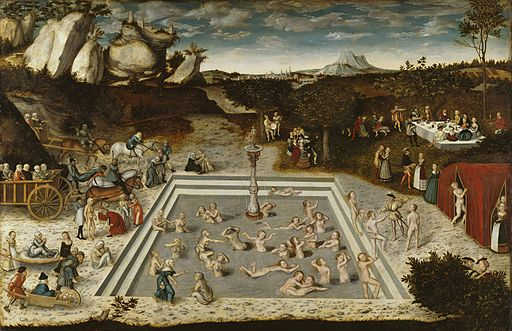
The fountain of youth (Der Jungbrunnen) by Lucas Cranach 1546
The beginning of the modern period in life-extensionism can be traced to the end of the 19th – beginning of the 20th century, to the so-called ‘fin-de-siècle’ (end of the century) period, which was characterized by the rise of scientific optimism and therapeutic activism, entailing the pursuit of life extension. Among the foremost researchers of life extension during this period were the Nobel Prize winning biologist Elie Metchnikoff (1845-1916), author of the cell theory of immunity and vice director of Institut Pasteur in Paris, and Charles-Édouard Brown-Séquard (1817-1894), president of the French Biological Society and one of the founders of modern endocrinology.
Life extension science, also known as anti-aging medicine, experimental gerontology, and biomedical gerontology, is the study of slowing down or reversing the processes of aging to extend both the maximum and average lifespan, which is currently not possible.
The key question is: Is aging inevitable? As of today, aging is inevitable. Societal norms and religion make it easier to accept aging and the inevitability of death.
Some researchers in this area believe that future breakthroughs in tissue rejuvenation, stem cells, regenerative medicine, molecular repair, gene therapy, pharmaceuticals, and organ replacement (such as with artificial organs or xenotransplantations) will eventually enable humans to have indefinite lifespans through complete rejuvenation to a healthy youthful condition.

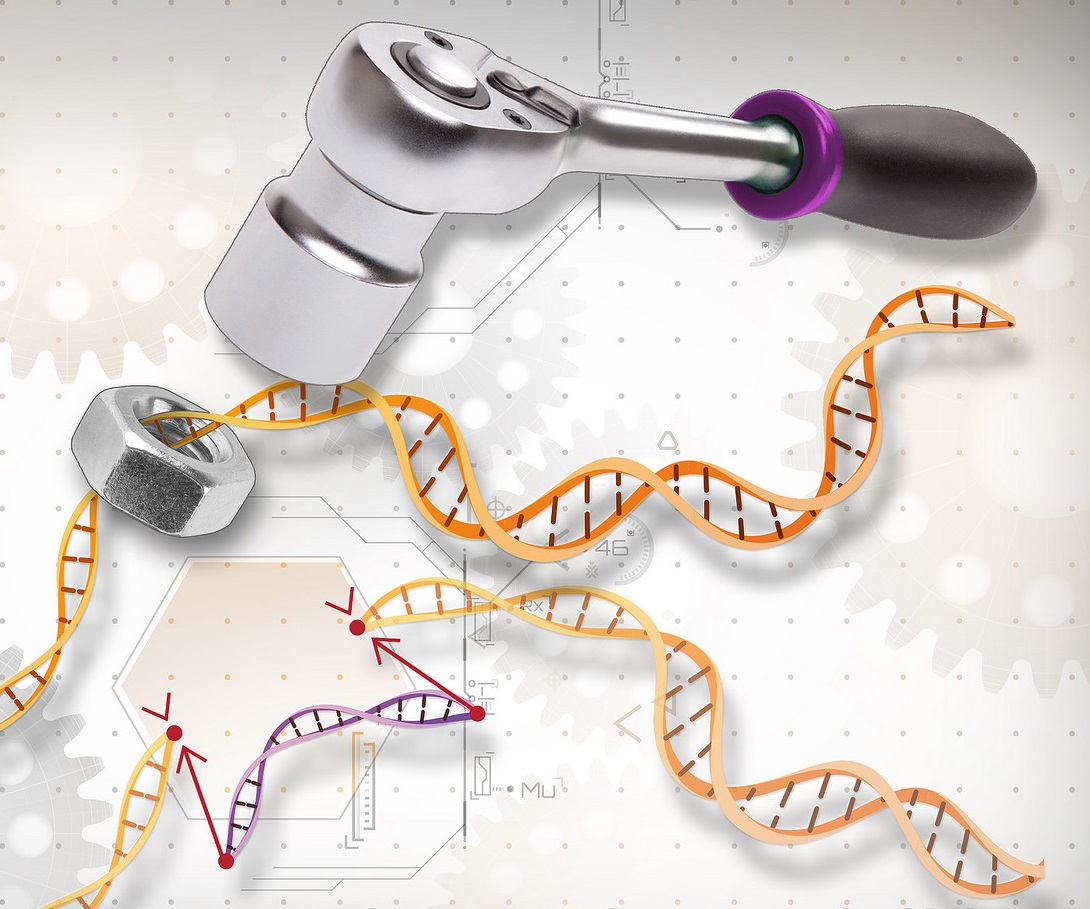
Aubrey de Grey is the world’s most famous biomedical gerontologist. He is the Chief Science Officer of the SENS Research Foundation (Strategies for Engineered Negligible Senescence). SENS is a proposal by Aubrey de Grey to cure aging that he sees as a disease. It has gathered widespread media and public attention. The SENS proposal is controversial and has been attacked by some experts. De Grey’s research focuses on whether regenerative medicine can prevent the aging process. He works on the development of a collection of proposed techniques to rejuvenate the human body and stop aging. His proposal states that even if we don’t know the underlying mechanisms of aging, if we can engineer the reversal of all the major molecular and cellular changes that occur with age, we will be able to reverse aging and rejuvenate ourselves. The proposal includes addressing seven forms of molecular or cellular damage caused by essential metabolic processes that accumulate with age. SENS is a proposed panel of therapies designed to repair this damage. SENS promises radical results: a cure for aging within a relatively short time of a couple of decades.
The solutions, however, are based on technologies and therapies that are not yet available or not yet developed to do what is necessary for SENS. These include stem cells to replace old cells, the application of enzymes to degrade certain forms of cellular junk, gene therapy technologies that allow the incorporation of transgenes with a high efficiency and viability, and the ablation of old cells. Many pharmaceutical interventions work as intended even though we don’t know why. Some anti-aging therapies may work based on the same principle: maybe we don’t need to know the exact functions of a given gene to delay aging in model systems and to develop anti-aging drugs by targeting that gene. Maybe we don’t need to know the mechanisms leading to damage in order to repair it and to preserve health.
The American Academy of Anti-Aging Medicine (A4M) was formed in 1991 as a non-profit organization to create an anti-aging medical specialty distinct from geriatrics, and to organize trade shows for physicians interested in anti-aging medicine. The A4M trains doctors in anti-aging medicine and publicly promotes the field of anti-aging research. The American Academy of Anti-Ageing Medicine holds annual conferences that attract thousands of businessmen, chemists and physicians. Some critics of the organization say it has spread the idea that getting old is basically a treatable condition.
Although we are not closer to finding the fountain of youth, humans are living longer than ever before. Hitting the 100-year milestone used to be for the lucky few who would reach it in relatively good health. In theory studying these centenarians might reveal the secrets of healthy aging. Over the last 150 years modern medicine and improved standards of living have increased the life expectancy at birth by 3 months per year. In order for life expectancy to continue increasing, the mortality rates in the oldest age groups must decline. This can only be achieved by tackling the biggest killers – cancer, heart disease, stroke and Alzheimer’s.
Humanity is forecast to undergo rapid population aging in the coming decades. The demographic of global populations is changing more rapidly than ever in the 21st century. Improved health and longevity have altered the demographic trends reflecting the medical advances reducing disease and mortality and leading to increase of life expectancy. These demographic changes have had unprecedented effect on individuals and economies and will have a major impact on nutrition and health care in the future.
Aging and the diseases associated with old age are becoming a worldwide social and economic problem. As the aging population increases, there is a growing awareness of the importance of healthy aging and quality of life. Longevity is influenced by multiple factors like genetic makeup, physiology and metabolism, social and environmental factors and life style habits.
Aging research has been very intensive in the last years aiming at characterizing the pathophysiology of aging and finding possibilities to fight age-related diseases. Scientific efforts to extend lifespan are progressing on several fronts. Research has proven that a short-lived species can evolve into a long lived one. Studies in mammals have shown that a severely restricted diet can add years of healthy living. Diet affects humans too. Food and nutrition play a huge role in health and wellness throughout life.
Few resources are allocated to studying and understanding the aging process and most people are not aware what research is done on the biology of aging. Much bigger funding is available to fight specific age-related diseases than to fight the aging process. Less than 20% of the US National Institute on Aging’s budget for instance goes on researching the underlying causes of aging, much lower than the resources available to other medical problems such as neurodegenerative diseases and cancer.
A multibillion-dollar anti-aging industry has been promising decades of extra life and good health beyond the age of 100 in the last 20 years.
The global anti-aging market was worth 250 billion USD in 2017. This includes cosmetic products, vitamins, supplements, hormonal and other therapies and rejuvenation services.
There has been disturbing lack of safety regulation, unproved medical claims, risky products that could cause serious health problems, and a celebrity-dominated marketing machine promising an extended youth, with little science to back it up.
Many of the anti-aging therapies are based on replacing the body’s hormones as people grow older. But the anti-aging industry also includes extensive use of products such as Botox, vitamins and dietary supplements. All have become hugely popular, but there is little proof that they work or are 100% safe. Chains of rejuvenation centers have sprung up across the globe promoting the latest ‘cures’ for getting old. The sale of anti-aging products such as supplements and hormone replacement is a lucrative global industry. The use of such products has not been proven to be effective or safe. Some of these therapies have been criticized for possible dangers. For example, the American Medical Association has been critical of some anti-aging hormone therapies. One of the most controversial therapy is the use of Human Growth Hormone (HGH) as an anti-aging therapy in healthy people. There are mixed reports that GH or IGF-1 modulates the aging process in humans and about whether the direction of its effect is positive or negative.
Much of the life extension research focuses on nutrition, diets or supplements, although there is little evidence that they have an effect. The many diets promoted by anti-aging advocates are often contradictory.
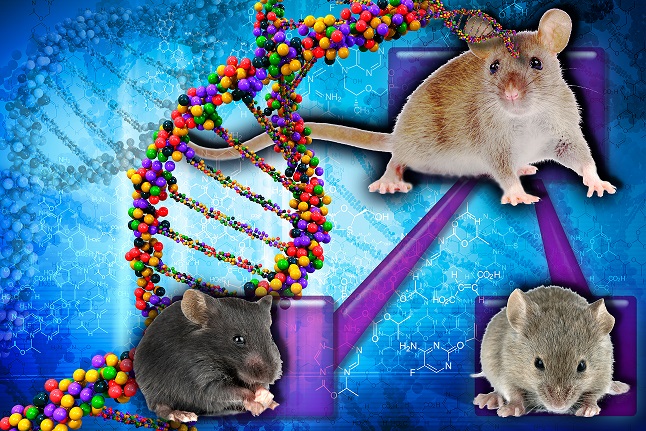
In some studies calorie restriction has been shown to extend the life of mice, yeast, and rhesus monkeys. However, a more recent study did not find calorie restriction to improve survival in rhesus monkeys. In humans the long-term health effects of moderate caloric restriction with sufficient nutrients are unknown.
The free-radical theory of aging suggests that antioxidant supplements might extend human life. However, evidence suggest that β-carotene supplements and high doses of vitamin E increase mortality rates. Resveratrol is a sirtuin stimulant (found in red wine) has been shown to extend life in animal models, but the effect of resveratrol on lifespan in humans is unclear.
The most promising strategy to cure aging is to stimulate the body’s own regenerative capacities.
Enjoy your life to the fullest at any age! Wherever, whenever. Create your own style! Unlock your natural energy, healing power and vitality and defy aging!